

How to Use a Surveyors Tape Measure Indoors in 2026
Sep 18, 2026
Hook the tape's zero end over a nail or have a second person brace it at the starting corner, run the steel blade flat and taut along the skirting board, and read the measurement at the far wall to the nearest millimetre — that's how to use a surveyors tape measure indoors in 2026. The catch most guides skip: these tapes are built for long, straight outdoor runs of 30m or 50m, so the wider blade and heavy locking reel can be awkward in tight corners and door reveals, where a shorter tape or a digital spirit level does a cleaner job.
- Hook the zero end, keep the blade flat, and read to the millimetre — the core of how to use a surveyors tape measure indoors.
- A 30m Grettz surveyors tape measure covers most single rooms; a 50m tape suits whole-property surveys.
- Blade sag and parallax reading errors are the two most common causes of wrong room measurements in 2026.
- Cross-check with a digital spirit level when floors aren't flat, common in older UK homes.
Why this matters
Fabric tapes stretch. A cheap 5m tape that's been dropped a few times will read short or long by several millimetres over a single wall, and that error compounds across a room. A steel-bladed 30m surveyors tape measure doesn't stretch the same way, which is why tradespeople carry one for quoting jobs, ordering flooring, or checking a room before a kitchen fit even when the room itself is nowhere near 30m long.
Getting the technique right matters more indoors than outside. Outdoors you're usually measuring a straight boundary or a foundation line with room to keep the blade flat on open ground. Indoors you're fighting corners, furniture, and floor level changes at every threshold, and those obstacles are exactly what throws a surveyors tape measure off if you rush it.
How to use a surveyors tape measure indoors: step by step
The steps below apply whether you're measuring a single bedroom or running a full property survey room by room in 2026.
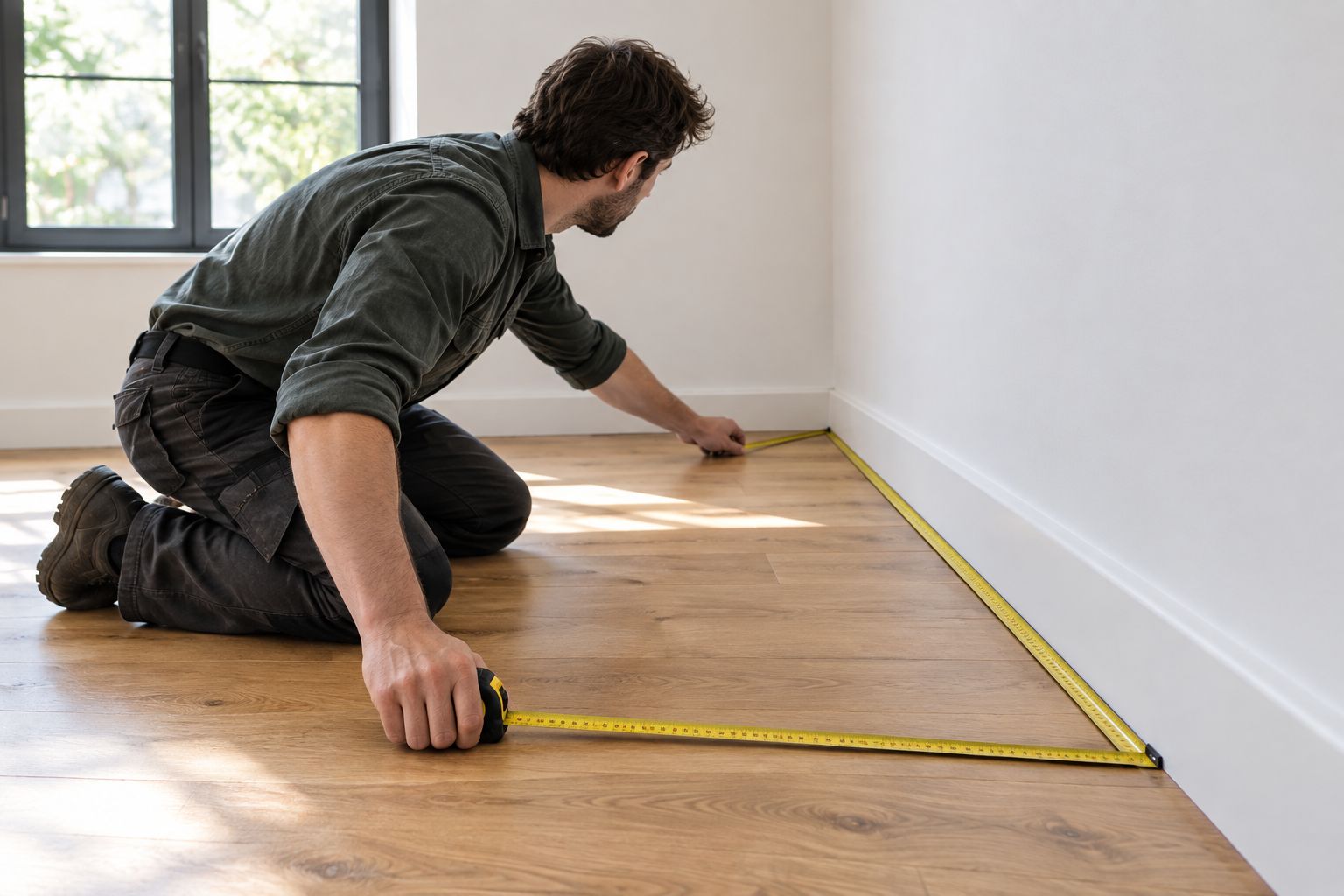
- Anchor the zero end. Hook the ring over a fixed point — a nail head, a door frame corner, or a second person's thumb — so it can't slip while you walk the blade out.
- Lay the blade flat. Run it along the floor or skirting board rather than letting it float mid-air; an unsupported blade sags into a curve and reads long.
- Keep tension even. Pull it snug without stretching hard enough to lift the graduations off true — steel doesn't need much force to sit flat.
- Read straight on, at blade height. Crouch down so your eye is level with the mark rather than reading from standing height; reading at an angle causes parallax error, often a few millimetres per wall.
- Record the figure immediately. Write it down before you release tension or move to the next wall — memory is where most on-site measurement mistakes actually happen.
- Retract slowly. Let the locking reel wind under control rather than snapping the blade back; a fast retract on a steel tape wears the edge and the zero hook faster over repeated site use.
30m tape: right for most single rooms
A 30m surveyors tape measure covers a typical UK living room, bedroom, or single-storey extension in one run without needing to relay it mid-wall. It's also lighter to carry room to room, which matters when you're surveying a whole house in one visit.
50m tape: right for whole-property surveys and plots
A 50m tape earns its length on open-plan layouts, multi-room commercial surveys, and outdoor boundary checks where you'd otherwise be relaying a shorter tape twice. It's heavier on the reel and slightly more to manage solo indoors, so most single-room jobs don't need the extra length.
| Model | Length | Best for | Verdict |
|---|---|---|---|
| Grettz 30m Surveyors Tape | 30m | Single rooms, extensions, small gardens | Buy |
| Grettz 50m Surveyors Tape | 50m | Multi-room surveys, plots, boundary checks | Buy |
Both are steel-bladed, which is the main reason to pick either over a fabric DIY tape for anything you're going to quote or build against. The trade-off with steel: the blade is stiffer to coil back than fabric, so give the reel a second to settle before locking it away.
Why accuracy varies indoors
A surveyors tape measure is accurate by design, but the reading you get depends on how you use it. The factors below cause most of the millimetre-level errors people report:
- Blade sag across open spans longer than 5-6m when nothing supports the middle of the tape
- Parallax error from reading the scale off at an angle instead of straight on at blade height
- Zero-point wear on the end hook after years of site use, which throws every reading off by a consistent few millimetres
- Floor irregularities — skirting boards, raised thresholds, uneven joists — shifting exactly where you take the reading
- Working solo, since surveyors tapes are designed around a two-person outdoor workflow and one person indoors has to improvise an anchor point
If you're already comfortable using a tape measure on site, the indoor version is the same discipline applied to a smaller, more obstacle-heavy space.
Can you use a surveyors tape measure indoors?
Yes — a surveyors tape measure works indoors as well as it does outdoors, and its steel blade is more accurate than a fabric DIY tape for anything you're ordering materials against. The only adjustment is technique: anchor the zero end against a fixed point since you won't have a second person outdoors' worth of open space to work with.
What's the difference between a surveyors tape and a regular tape measure?
A surveyors tape measure runs 30m to 50m on a steel or fibreglass blade for long, straight distances, while a regular tape measure runs 3m to 8m on a flexible steel blade for close-quarters work like carpentry. Both read the same way; the surveyors tape just trades pocket size for reach.
Do surveyors tape measures need calibrating like laser levels?
No — a steel surveyors tape measure has no electronics or sensors to drift out of calibration, unlike a rotary or line laser level, which does need periodic checking. Physical damage to the blade or a bent zero hook is the main thing that throws a tape's readings off over time.


FAQ
How do you use a surveyors tape measure indoors?
Anchor the zero end at a fixed point, run the blade flat along the floor or skirting without letting it sag, and read the far end straight on at blade height. Record the figure immediately before releasing tension.
What's the best surveyors tape measure for room measurements in 2026?
A 30m surveyors tape measure suits most single rooms and small extensions, while a 50m tape is better for whole-property surveys. Both use steel blades, which hold accuracy better indoors than a stretched fabric tape.
Is a surveyors tape measure more accurate than a regular tape measure?
A surveyors tape measure is generally more accurate over distance because its steel blade resists stretch better than a fabric DIY tape. For short reveals under a metre, a regular tape or digital spirit level is easier to handle.
Why does my room measurement change every time I measure it?
Blade sag, parallax error from reading the scale at an angle, and a worn zero hook are the most common causes of inconsistent readings. Anchoring the tape firmly and reading straight on at blade height fixes most of it.
Can one person use a surveyors tape measure alone indoors?
Yes, but you need to anchor the zero end against a fixed point like a nail or door frame corner since there's no second person to hold it. This is more fiddly than outdoor use, where two people usually work the tape together.
Do you need a laser level as well as a tape measure for room work?
A tape measure gives you distance; a laser level or digital spirit level gives you level and plumb, and the two solve different problems. Most room-fitting jobs in 2026 use both together rather than one instead of the other.
How long should a surveyors tape measure be for a typical UK room?
A 30m surveyors tape measure covers a typical UK room or extension in a single run without relaying the blade mid-wall. Go to 50m only if you're surveying multiple rooms or an outdoor plot in the same visit.
One last thing
The step people skip most often is retraction, not reading. A steel blade that gets snapped back into the reel at speed year after year wears at the zero hook first, and a worn hook throws off every single measurement you take with it afterwards without you noticing. Wind it in slowly, check the hook sits flush before you lock the case, and a Grettz 30m tape used this way will still read true long after a cheaper tape measure has drifted out.

